Seeing the Forest and the Trees
Designing Landscapes that Integrate
Regional Specificity with Global Commonality
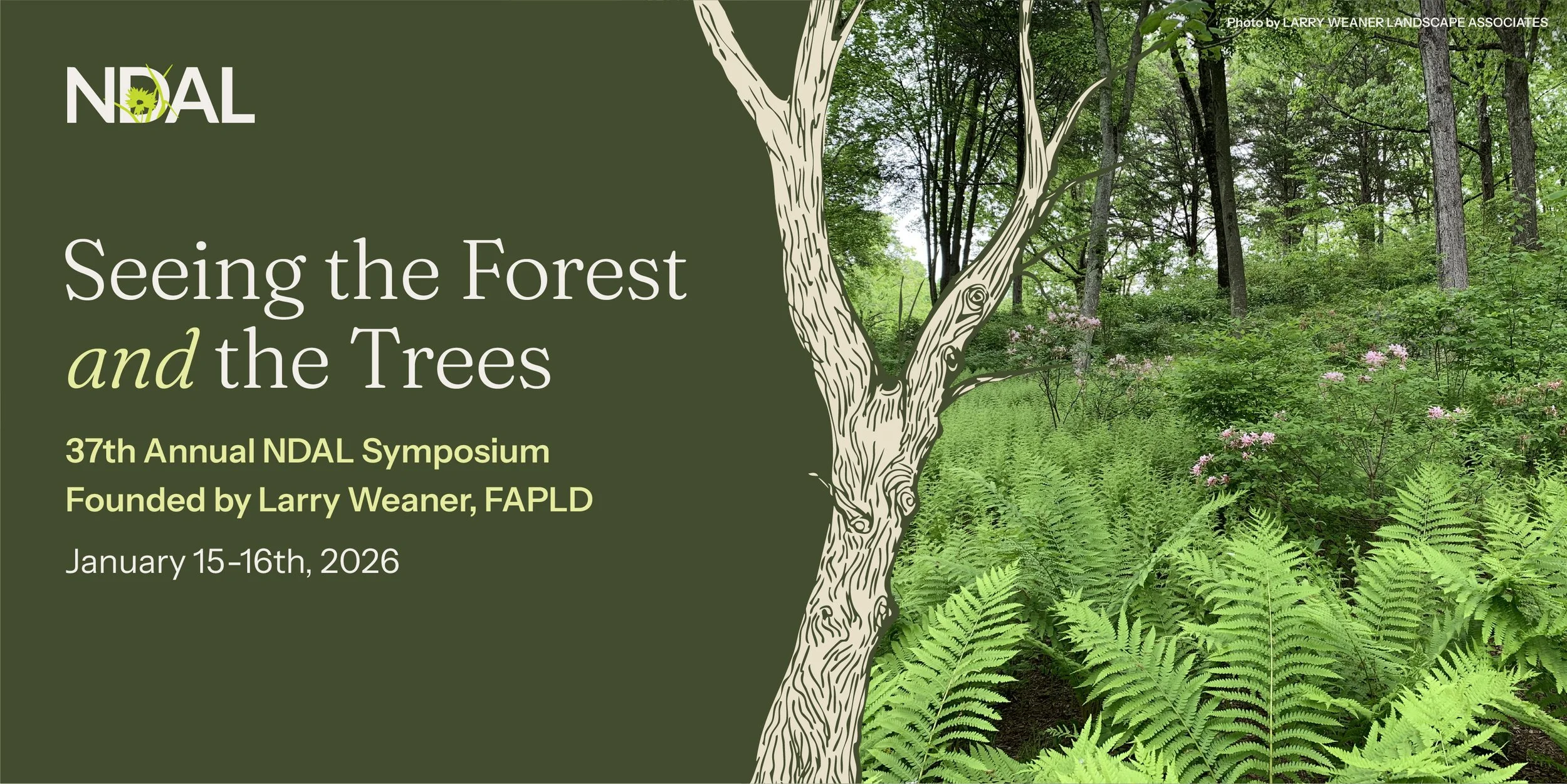
Incorporating a region’s indigenous plant communities and ecological processes is at the heart of ecology-based design. But no natural system operates in isolation or is forever immune to change…..especially today where the effects of watershed alteration, soil disturbance, plant globalization, and climate change are at play worldwide. Our Symposium will begin by zooming in on techniques for regionally-specific landscape analysis and design. We will then widen the lens and learn how disturbance, ecological science, and cultural land practices across regions can factor into those processes. Finally, we will explore how an expansive view of landscape art can unify this micro/macro divide in landscapes ranging from expansive to intimate.

Founded in 1990 by Landscape Designer Larry Weaner and NDAL, this annual two-day symposium has a long tradition of celebrating native plants and innovative ecological practice. Reflecting the diverse factors that shape our landscapes, presenters of the Symposium have historically included landscape architects, landscape designers, horticulturists, ecologists, historians, anthropologists, artists and others. The series offers in-depth explorations of forward-looking and overlooked topics, always seeking to connect theory with practical application. Join us as we continue to connect the dots between ecological restoration, cultural landscape practice, and fine garden design.
This Symposium will have applications for those practicing in any geographical location.
Scroll down for program details
Where & When:
*PLEASE NOTE VENUE LOCATION CHANGE: The Symposium will now be held at the Oasis Conference Center
at Hilton Garden Inn, Springfield, NJ, instead of Kean University.
*Oasis Conference Center at Hilton Garden Inn (virtual options available)
304 US-22, Springfield, NJ 07081
Jan. 15 - 16, 2026 | 9:00 - 5:00 PM ET
Oasis Conference Center is not the coordinator of this event and should not be contacted regarding the program.
For hotel information, scroll down below the program details and click the dropdown Hotel Recommendation.
Jump to program details
or REGISTER NOW
Fees
Regular Rate (in-person & virtual)
$380 if registered by Dec. 10, 2025
$410 if registered after Dec. 10, 2025
Student Rate - with ID (in-person & virtual)
$205 if registered by Dec. 10, 2025
$230 if registered after Dec. 10, 2025
Register by:
April 15, 2026 (Recordings)
Register today!
Recordings (register & view until April 16th)
Please note for Group Orders:
1) The Group Order purchaser must forward the confirmation email they receive to all attendees in their group.
2) In order to be officially registered, ALL attendees in the group - including the purchaser if attending - must click on the “Redeem Registration” link in that Group Order confirmation email.
3) Each individual attendee should then receive their own event confirmation email!
Recordings & CEUs
Recording of the program* will be available mid/late January and viewable for 3 months to all attendees
(in-person and virtual attendees).
*Please note: Kat Anderson’s presentation will not be recorded and will be live only on January 16th.
CEUs available
CEU types: APLD, CBLP, ISA, LA CES, NOFA, PLNA, SER (12 CEU hours for most types)
See here for details & instructions
We thank our Symposium Sponsors!

Speakers Sponsor:
Hospitality & Scholarships Sponsors:


Friends Sponsors:

Special Note: For many years, NDAL has deeply appreciated its partnership with Morris Arboretum of the University of Pennsylvania and Connecticut College Arboretum in jointly presenting the January Annual Symposium. While NDAL will be solely producing the Symposium from this year onward, we would like to gratefully acknowledge the important role these two institutions and their respective team members have played.
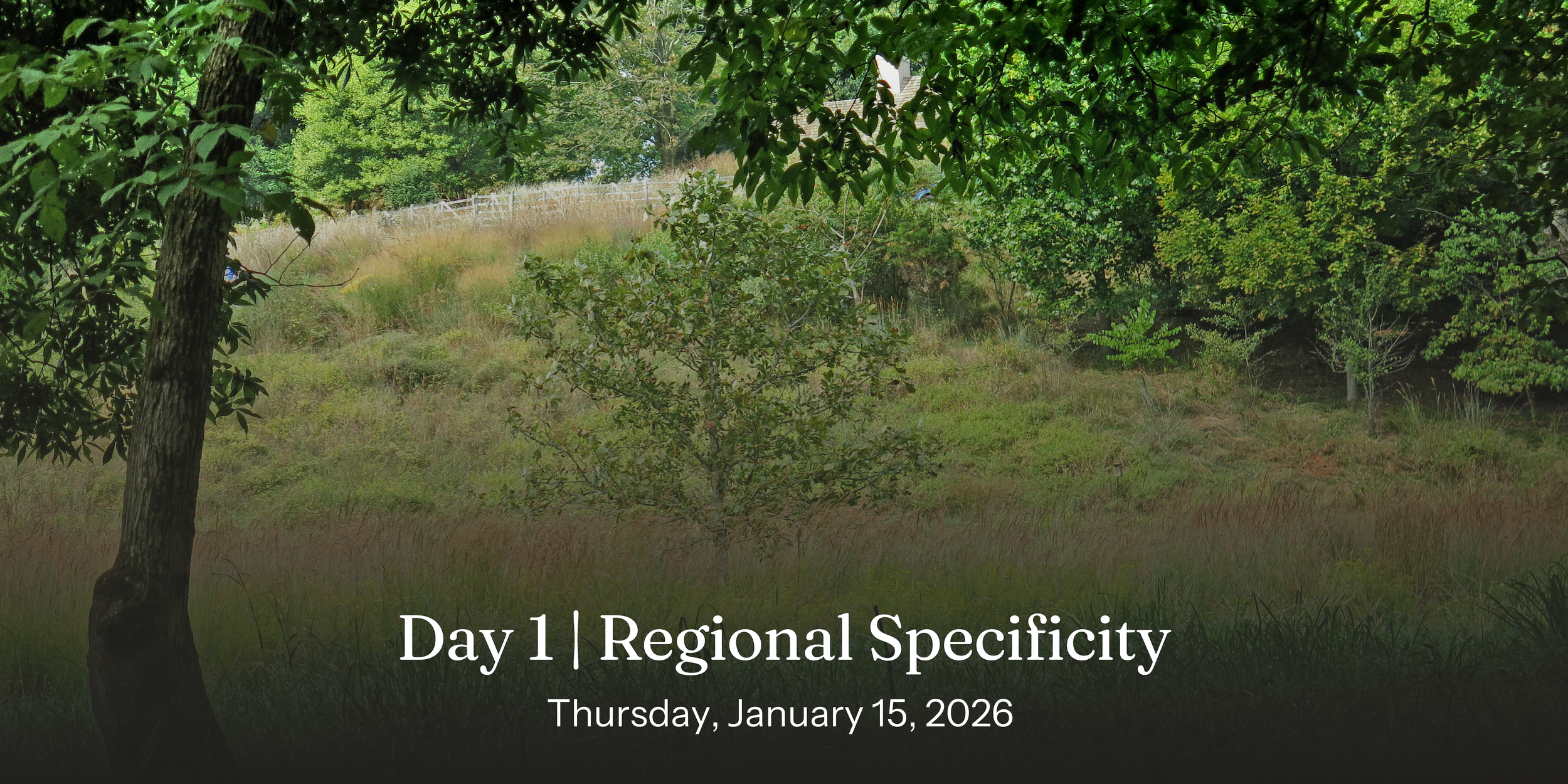
Photo by Mark Weaner
Light breakfast & lunch are included both days.
Evening reception immediately following the Day 1 program with complimentary wine, beer, and hors d’oeuvres.
Optional dinner add-on immediately following reception on Day 1.
Note: This program will have applications for those practicing in any geographical location.
Ecological Intelligence: Analysis into Design (1 hr)
Steve Apfelbaum & Jason Carlson, MS
This co-presentation will show how new and innovative technologies can be combined with on-site field observation to unlock deeper ways of understanding land and its condition. They will also illustrate how these important insights can feed and enhance the development of landscape projects that fall at the intersection of ecology and design. Accessing ecological knowledge that has largely remained in the domain of scientists can help landscape practitioners ensure that overall project goals are more consistently achieved, and that nature has a seat at every table.
Making Wild Make Sense: Native Landscape Management and User Experience (1 hr)
Larry Weaner, FAPLD
Deep site analysis can not only nourish a design but also lead to more effective and efficient management strategies. Furthermore, these strategies can be performed in a manner that results in a landscape that is both ecologically rich for wildlife and experientially rich for users. This approach is in effect, designing after the design….and can make the difference between user acceptance or rejection. In this presentation, we will explore how ecology-based management procedures can include aesthetic considerations to achieve landscapes that are successful both ecologically and experientially.
Panel: How Do We Address the Obstacles and Opportunities that Currently Affect Ecology-based Design? (30 min.)
Steven Apfelbaum, Jason Carlson, and Larry Weaner
A conversation between panelists and attendees on the hurdles and opportunities that exist in our contemporary professional world of landscape disturbance, invasive species, cultural expectations, and increased environmental awareness.
Adaptive Management: An Ongoing Ecological Interaction (1 hr)
Emily McCoy, FASLA, PLA
Wild landscapes are inherently dynamic — shaped by rain, wind, tide, plant proliferation and time. In this presentation Landscape Architect Emily McCoy of Design Workshop will show how adaptive management can build landscape resilience across a variety of scales. Illustrated projects will include a historic golf course on Jekyll Island, where fairways were reimagined as coastal habitat corridors, and where management protocols work with ecological disturbance rather than against it. Moving to the smaller scale, she will show how ecologically interactive management approaches can also be applied in residential landscape environments. By embracing uncertainty and designing for continuous learning, these projects demonstrate how adaptive management can transform static design into an evolving ecological partnership — one that connects science, culture, and creativity.
Small Spaces, Big Habitats (1 hr)
Preston Montague
The environment we share is a system, a kind of ecological machine made up of interdependent parts. Remove even the smallest gear, and the system’s function may be compromised, its resiliency reduced. Even small scale projects like urban infill, suburban residential, and small-scale commercial can benefit from a region-specific designed-systems approach. In fact, their diminutive size allows practitioners to more efficiently observe, experiment, and refine the specific animals, insects, or microbial species associations. Join Landscape Architect Preston Montague for a conversation about small projects with big ecosystem service potential. He’ll share habitat-focused residential projects built on modest budgets—the methods, successes, and challenges—and the strategies that ultimately enabled him to scale up his habitat-building work from residential to municipal.
Curating Landscape Narratives: Telling Stories Through Nature-Culture Based Design (1 hr)
Elizabeth Kennedy, FASLA, RLA
In her keynote address to the 2023 ASLA conference audience, renowned marine biologist Ayana Elizabeth Johnson charged society members to “design in” rather than “design with” nature, placing the interests of the earth in its fullness on par with those of humans. This presentation will aim to bridge gaps between cultural and ecological landscape design by examining the cultural importance of site specificity, the range of natural systems comprising narrative-focused landscapes, and the technical role of curating cultural identity in ecological landscape design.
Panel: How Can Culture and Nature Operate in Tandem? (30 min.)
Emily McCoy, Preston Montague, and Elizabeth Kennedy
Panelists and attendees will discuss how distinctly regional cultural and ecological characteristics can be accommodated, and even combined, in a multi-tasking landscape environment.
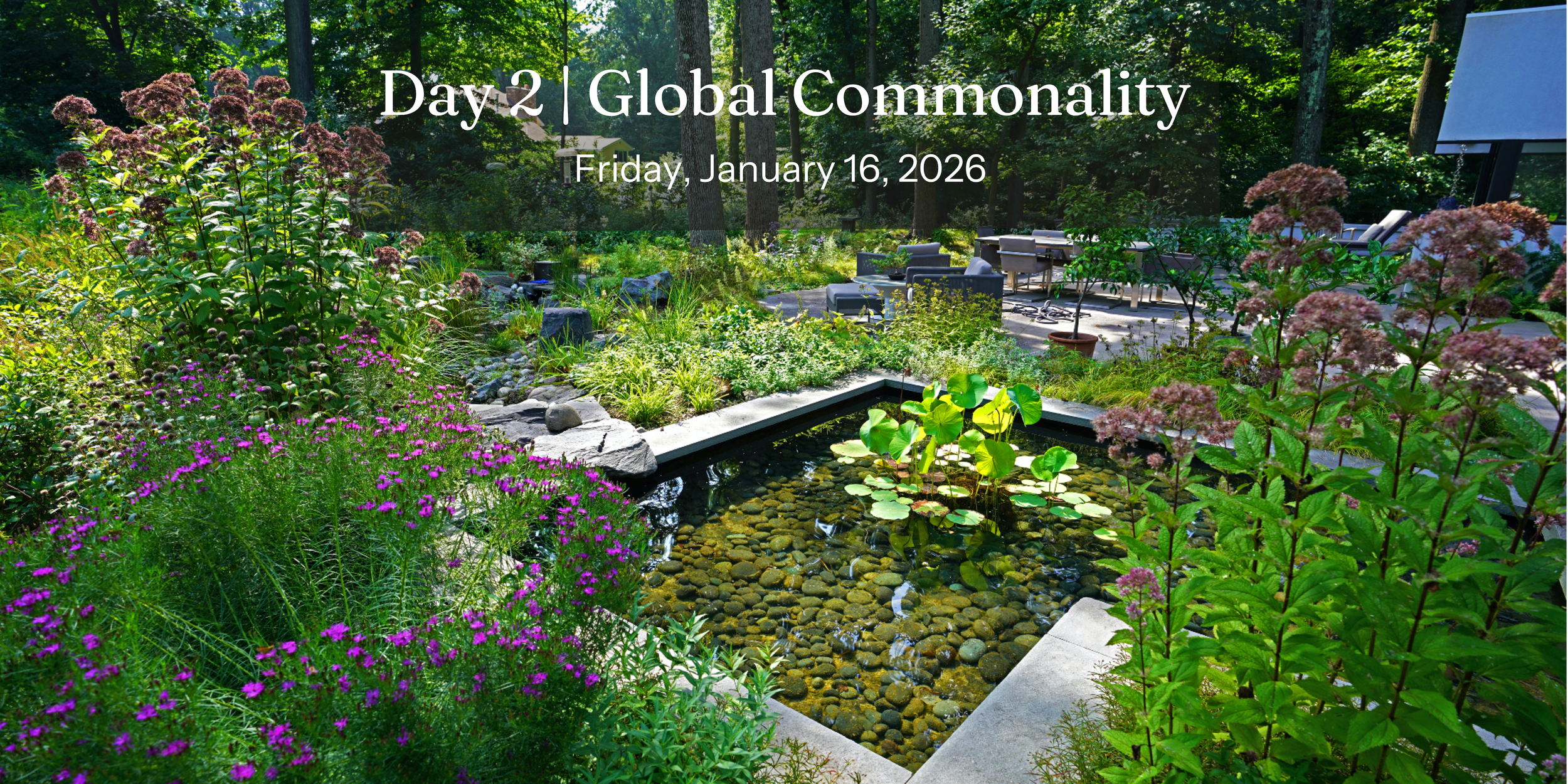
Photo by LWLA (Larry Weaner Landscape Associates)
Light breakfast & lunch are included both days.
Note: This program will have applications for those practicing in any geographical location.
Material Landscapes: Engaging Regionalism and Universalism (1 hr)
James A. Lord
James A. Lord, Founding Partner at Surfacedesign, will present a selection of significant works by notable Brazilian modernist landscape architect Roberto Burle Marx. The lecture will also explore Surfacedesign projects in the San Francisco Bay Area and abroad that are inspired by Roberto Burle Marx’s legacy through their commitment to modernism, ecology and collaboration with local and native communities. As was the case with Burle Marx, their work focuses on cultivating a sense of connection to the built and natural world of the region, as well as connecting with the wider world, pushing people to engage with the landscape in new ways. The result is a process that has led to inspiring landscapes that are rugged, contemporary, crafted, and display both regional and universal connections.
Invasive Species and Climate Change: Resources for Landscape Planning and Management Decisions (1 hr)
Dan Buonaiuto, PhD
Biologist Dan Buonaiuto will highlight efforts focused on climate-smart plant selections to support ecological communities that can persist in a changing world and resist pressure from invasive plants. He will present research by the Northeast Regional Invasive Species and Climate Change Network (NE RISCC). Since 2016, their work aims to reduce the compounding effects of invasive species and climate change by synthesizing relevant science worldwide, sharing the needs and knowledge of practitioners, building strong communities of scientists and practitioners, and conducting priority research. Given that the climate change - invasive species dynamic is a worldwide phenomena with common characteristics that cut across regions, solutions will require both regional specificity and global commonality. Dan will conclude by relating NE RISCC’s findings to similar efforts worldwide, in order to further advance the effectiveness of this daunting yet important task.
Fire and Traditional Landscape Design Practices (1 hr)
Margo Robbins
Traditional fire regimes shaped the landscapes that indigenous people inhabit(ed), supporting ecosystem health while promoting the growth of culturally important plant communities that sustain the people and our non-human relatives. This lecture will delve into the eco-cultural indicators that inform decisions of how and when to use fire to take care of our environment. It touches on empirical data monitoring the effects of fire on the land and how native and non-native plants react to it. Ecology based landscape design is not new, it is an ancient practice that has now come full circle.
*Co-Creators with Nature: Designing Relational Landscapes (1 hr) - *Please note: Kat Anderson’s presentation will not be recorded and will be live only on January 16th.
Kat Anderson, PhD
How can traditional ecological knowledge (TEK) contribute to the creation of alternative approaches to ecologically based landscape design? Examples of Indigenous gathering/stewardship practices that meet human needs while perpetuating plant populations will include setting fires with fire-making kits/torches, coppicing shrubs with flint blades, spreading seeds around with flails and seed beaters, as well as scattering and replanting underground swollen stems (bulbs, corms, and tubers) with digging sticks. Ms. Anderson will make the case that these human activities, both the low-tech tools used that are appropriate technologies, and the harvest/stewardship strategies implemented, mimic natural disturbance such as an elemental force (fire) or animal harvesting in ways that are concrete demonstrations of the ecological concepts of mutualism and coevolution. She will invite the audience to debate these assertions and ask the final question: Can we claim that these are examples of human adaptation to nature, and what can contemporary landscape practitioners learn from them?
The Secret Life of a Hay Meadow: Historic Practice Revisited at Wakehurst of the Royal Botanic Gardens, Kew (1 hr)
Iain Parkinson
Iain Parkinson, Head of Landscape and Horticulture at Wakehurst of Kew will examine the complex evolution of the traditional UK hay meadow with its entangled histories of plants, pollinators, birdlife, soil, water, grazing and archaeology. These meadows have outsized significance for US practitioners as most open field projects here start with a European grass dominated composition. Integrating these exotic species with US natives requires an understanding of the ecological and agricultural practices that produced them. In this presentation Iain will trace the seasonal patterns, ecological rhythms, and agricultural/cultural practices that comprise the UK meadow. He will explore the intricate relationship between beauty and utility, revealing how meadows are interwoven and sustained by the connections between people, plants, and place.
Note: James Hitchmough will be filling in for Nigel Dunnett.
Novel Plant Communities: Some U.K. Perspectives & Projects (1 hr)
James Hitchmough
Horticulturist and Garden Designer James Hitchmough first started thinking about designing and managing Novel Plant Communities in the mid 1980s, often by taking a core of native species and then adding non-native species to deliver specific ecological and cultural ecosystem services beyond what was possible with the native species alone. In this presentation he will explain why these approaches have become widespread in Europe and give examples of three current projects that explore these ideas at different scales.
Jump to fees & registration
Speakers
NDAL gratefully acknowledges Pleasant Run Nursery for its sponsorship of our speaker fees.
Kat Anderson has a Ph.D. in Wildland Resource Science from UC Berkeley and is a Research Associate in the Department of Plant Sciences at UC Davis. She has worked with Native Americans for many years, learning how Indigenous people judiciously gather and steward native plants and ecosystems in the wild. She is the author of the book Tending the Wild: Native American Knowledge and the Management of California’s Natural Resources (University of California Press 2005) and the new book I Sing to the Earth and She Sings Back (to be published) which is about restoring our human relationship with the natural world.
Steve Apfelbaum is founder, director, and senior ecologist at Applied Ecological Institute (AEI). At the institute he focuses on large conservation and restoration projects, where his unique creative design solutions save time and money and benefit ecology, as well as the economic & cultural elements of each project. Before retiring in 2022 after 45 years as owner and senior ecologist with Applied Ecological Services, he led ecological research and design of award-winning projects, contributing his scientific expertise to more than 20,000 projects across North America and the world.
Dan Buonaiuto, PhD, is an assistant professor and extension specialist in the Department of Plant Science and Landscape Architecture at the University of Maryland. Dan's research focuses on how the interactions between climate change and invasive species alter plant communities, and how horticulture and landscape practitioners can impact---and will be impacted by---these complex ecological changes. Dan also serves on the leadership team of the Northeast Regional Invasive Species and Climate Change Network (NE RISCC); a boundary-spanning organization that integrates science and practice to support informed management of invasive species in a changing climate.
Jason Carlson, MS, (Resource Planning), is VP of Product, Project Direct and Geospatial Analyst for Stratifyx. Stratifyx is an ecological-based land use consulting service and Software as a Service (SaaS) product development company. Jason directs the product development team of engineers, programmers, and GIS analysts, integrating geospatial tools with ecological impact bringing nature-based solutions to scale. As part of this integration Jason is active in all facets of consulting/service project implementation, with a passion for clean water, healthy soil, and biodiversity to build a more resilient landscape.
James Hitchmough is Professor Emeritus in the School of Architecture and Landscape at the University of Sheffield. He retired from Sheffield in 2022, but continues to work on design and management projects around the world, and to write about his experiences. The completely new 2nd Edition of The Dynamic Landscape: Design, Ecology and Management of Naturalistic Urban Planting (with Nigel Dunnett) was recently published (Routledge 2025). Much of his energy is however now consumed by the development of his own new garden in SW England, an opportunity to fly kites without the strictures of professional practice.
Elizabeth J. Kennedy, FASLA, RLA is the 2022 recipient of the Landscape Architecture Foundation Medal, which honors a career of distinguished work in landscape sustainability. She heads EKLA, whose projects intersect cultural heritage and ecology in socially just ways and exemplify landscape architecture's potential to engage a broader critical understanding of place and identity. Her firm’s highly disciplined and minimally invasive approach to landscape architecture is reflected in national recognition and awards for design excellence, innovations in green infrastructure, historic preservation, cultural interpretation, and site management.
James A. Lord is a Founding Partner of Surfacedesign, an internationally award-winning landscape architecture firm based in San Francisco, California. James’ innovative design approach and stewardship of the firm’s design practice have established Surfacedesign as an international leader in urban design and sustainability. James has led the design of projects such as the Expedia campus in Seattle, New Zealand’s Auckland International Airport, and Bayfront Park in San Francisco. James received his Master of Landscape Architecture from the Harvard Graduate School of Design and his Bachelor of Architecture from the University of Southern California.
Emily McCoy, FASLA, PLA is a Principal at Design Workshop and an Assistant Professor of Practice at NC State University. Her work bridges ecological science and design practice, advancing evidence-based and adaptive management approaches across complex cultural and ecological landscapes—from barrier islands and arboreta to museum parks. At Design Workshop, Emily leads initiatives that measure landscape performance, integrate resilience and biodiversity into planning, and translate research into design innovation. Her recent work on Jekyll Island reimagines a historic golf landscape as a living laboratory for coastal adaptation and stewardship.
Preston Montague is a landscape architect and artist working to strengthen relationships between people and the natural world. His environmental design studio deploys art, horticulture, and landscape architecture in the service of building places that have meaning and ecological depth. When not in studio, Preston enjoys teaching landscape architecture at North Carolina A&T State University and hiking the wilder places.
Iain Parkinson is Head of Landscape and Horticulture at Wakehurst, Royal Botanic Gardens at Kew's wild botanic garden in West Sussex, where he has worked for over 40 years shaping the landscape with meadows at its heart. He is also the author of Meadow: The Intimate Bond Between People, Plants and Place (The University of Chicago Press 2022), exploring the deep connections between nature and culture.
Margo Robbins comes from the traditional Yurok village of Morek, and is an enrolled member of the Yurok Tribe. She is the co-founder and executive director of the Cultural Fire Management Council and co-lead of the Indigenous Peoples Burn Network. She graduated from Humboldt State University and resides on the Yurok reservation in far northern California. She previously served as the Indian Education Director for the Klamath-Trinity Joint Unified School district. She is a mom and a grandma.
Larry Weaner, FAPLD, founded Larry Weaner Landscape Associates (LWLA) in 1982 and its educational affiliate, New Directions in the American Landscape (NDAL) in 1990. His nationally recognized work combines horticulture, landscape design, and ecological restoration, and spans more than twenty U.S. states and the U.K. His book, Garden Revolution: How Our Landscapes Can Be a Source of Environmental Change (Timber Press 2016), co-authored with Tom Christopher, received an American Horticultural Society (AHS) Book Award in 2017. In 2021 he received the AHS Landscape Design Award and the Association of Professional Landscape Designers (APLD) Award of Distinction.
“I love that the symposium includes a mix of emerging research, technical insights, design, and inspiration, and that the individual sessions complement each other towards a larger understanding. I always come away inspired.”
What past participants are saying
“Very informative yet entertaining. The content is very inspiring to my own practice.”
“Learning applicable, real-world science data relevant to design decision-making.”
“Loved the balance of technical and theoretical topics! Also really appreciated the indigenous representation and the space to grapple with the difficult and violent history of land management. Excited to see this conversation develop further and deeper.”
“Different topics and speakers from most other conferences.”
“I enjoyed hearing and seeing different approaches to the overall theme of the conference. I appreciated the overlap of scientific data, within an aesthetic and cultural context.”
Hotel Recommendation
-
Hilton Garden Inn in Springfield, NJ
304 US-22, Springfield, NJ 07081
$145/night
Must reserve by Friday, Jan. 9, 2026, 11:59 PM for reduced rate.
Visit the booking website:
Go to: Booking Link
Enter the Group Code :
Use the group code NDAL to access the discounted rates and availability.
Select Your Dates and Room Type:
Choose your check-in and check-out dates, then select the room that suits your needs.Complete Your Reservation:
Follow the prompts to enter your personal details and payment information.
Alternatively, you may call the hotel directly at 973-232-5300 and mention the group code NDAL / NDAL ORGANIZATION ROOM BLOCK to book your room.
Registration & Portal
-
When registering you will be asked to either sign into your existing account or create one. This account will give you exclusive access to the session recordings and course materials. These materials will be available until three (3) months after the live event dates.
-
1) The Group Order purchaser must forward the confirmation email they receive to all attendees in their group.
2) In order to be officially registered, ALL attendees in the group - including the purchaser if attending - must click on the “Redeem Registration” link in that Group Order confirmation email.
3) Each individual attendee should then receive their own event confirmation email!
-
To purchase a course as a gift for someone else, go to your chosen course, click Register, then check off “This is a gift.”
-
Members please reach out to the Native Plant Society of New Jersey for the coupon code to receive 10% off upon registering.
-
Accredited Organic Land Care Professionals of The Northeast Organic Farming Association of Connecticut receive a 10% discount on this course. Please look out for the discount code from NOFA, or contact Jennifer Shaffer, NOFA Organic Land Care’s Program Director at jennifer@ctnofa.org for the code.
-
Registration will be refunded only if notification is received before ten (10) working days prior to the live event date less a $10 processing fee.

-
The program will be recorded and available (except for Kat Anderson’s session which will be live only) to all registrants after the live session ends for three (3) months. If you are registered, you do not need to attend the live session in order to access the recording.
-
You can register for 3 months past the live session date, and access the materials - including the recording - until that point.
-
Zoom Webinar. Please make sure to download the Zoom application (https://zoom.us/download) and download the latest Zoom update if needed prior to the live course. We recommend that you join ~5 minutes prior to the start time. The speakers will use slide presentations. If you have any technical difficulties during the session and need to contact us, please email info@ndal.org instead of calling.
-
Yes, please see the CEU details at the top of this page.
FAQs
Student Scholarships -
Free Symposium Admission
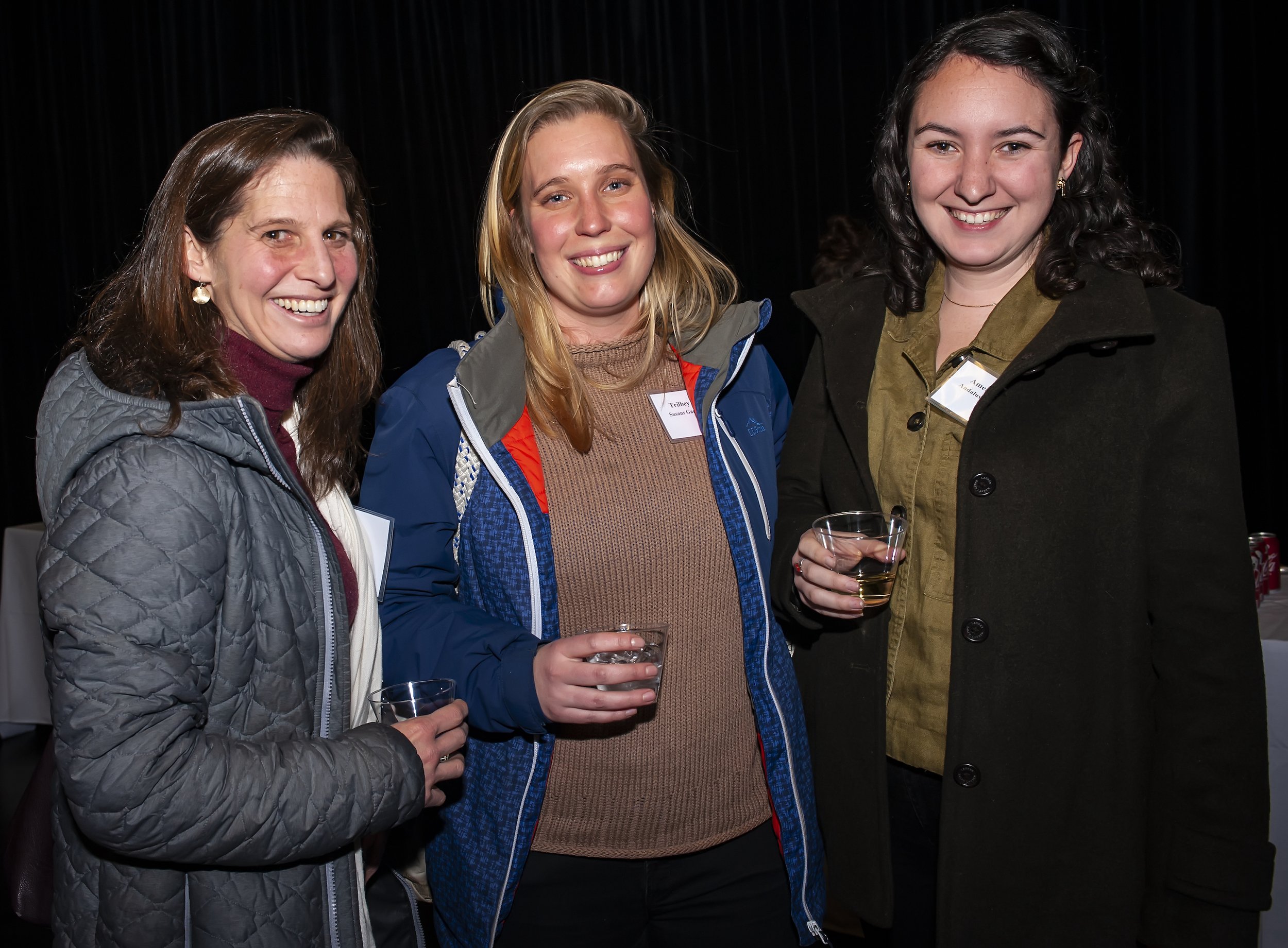
Students and recent graduates are invited to apply for scholarships granting free admission to the Symposium. Four scholarships will be awarded. The scholarships honor Darrel Morrison, FASLA, Senior Honorary Faculty Associate, University of Wisconsin-Madison, Department of Planning and Landscape Architecture; and Glenn Dreyer, Connecticut College Arboretum Director Emeritus.
Eligibility: Current undergraduate/graduate student or matriculation in 2025/2026.
Application deadline: December 1, 2025.
Recipients notified by: December 5, 2025.
To apply: Complete this form
Applicants will be notified by December 5 so that anyone who is not selected has time to register for early-bird admission, which ends on December 10.
Photo by Gina Vecchione Photography
“I am always delighted. You seem to outdo yourselves each year.”
Contact
Registration and Portal questions:
Alyssa Calderone Prevost
NDAL Programs & Administrative Associate
acalderone@ndal.org
Venue & travel questions:
Madeleine Heimer
NDAL Symposium Coordination Assistant
events@ndal.org
267-587-6657
Symposium Producer


Sponsorships available - expand your reach!
Expand your company’s reach among landscape professionals and sponsor the Symposium!
*Please note: The Symposium sponsorship program is solely administered and associated with New Directions in the American Landscape (NDAL). Sponsorship of the symposium is exclusively an exchange for goods and services and does not impart any tax-deductible benefits.